iPhone 6 does not turn on - Long Screw Problem?

D_R

New member
Hi,

I have a iPhone 6 on my desk. The phone does not turn on after a display change. When I connect the charger, the phone gets 900mA. I tried to do a hard reboot holding the Power and the Home button. The Phone then drew for a short time about 300mA and then returned again to 900mA.

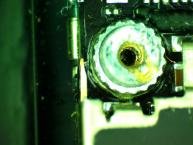
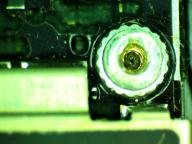
Under the microscope I saw something that looks like a "long screw damage" to me. And the FL1151 is missing.

Sorry, but I hand't seen a long screw damage before. Is this how it looks like? Is it worth doing something with this board?

Hmm.. The board reduced the size of the images. Here are the original images:

https://db.tt/F0aymQZQ
https://db.tt/V7PwcoXA
https://db.tt/y2freNEe
 

Attachments

  • photo111.jpg
    photo111.jpg
    4.6 KB · Views: 0
  • attach913.jpg
    attach913.jpg
    4.6 KB · Views: 0
  • photo112.jpg
    photo112.jpg
    6.8 KB · Views: 0
  • photo113.jpg
    photo113.jpg
    6.9 KB · Views: 0
Last edited:

larossmann

Administrator
Staff member
That is long screw damage. I wouldn't do that for less than $600 and data recovery only, screw using the phone again. That is long screw.
 

D_R

New member
Thank you for your answer. The phone is not here for data recovery, so it's going back. But I have another follow up question, you might be able to answer. Today I saw Jessa's video about the long screw damage on a board for data recovery. She wasn't able to fix the problem herself and gave the board to one of her "helper".

I think on the ifixit board Jessa was asked if it's possible just to take the NAND Chip from the board and put it on a working Logicboad. And Jessa said, that this is not possible. And I wonder why. The new gadget from china is to turn your 16GB iPhone into a 128GB by replacing the NAND Chip on the board. Or to remove the iCloud lock by taking 3 or 4 Parts from the Board into an external programmer and reflash these.

So I think, that all of the user specific data is on this 3 or 4 Chips. Why do you have to restore traces on a dead logic board to recover data instead of just swapping the parts to a known working Logicboard?
 

rany

New member
Like Louis said, the major challenge is transferring more than one chip, and the toughest of all is transferring the CPU without shorting something like the RAM during soldering onto the target board. Good luck with that.
 

D_R

New member
Like Louis said, the major challenge is transferring more than one chip, and the toughest of all is transferring the CPU without shorting something like the RAM during soldering onto the target board. Good luck with that.

I get your point. But if some chines can swap the three chips in the backyard with crappy tools to get rid of the iCloud Lock, why can't we do the same in our modern labs with expensive tools just for data recovery?
 

larossmann

Administrator
Staff member
I get your point. But if some chines can swap the three chips in the backyard with crappy tools to get rid of the iCloud Lock, why can't we do the same in our modern labs with expensive tools just for data recovery?

Because they have no lives and get paid one dollar an hour. Their employers can afford to pay them for spend two weeks of time invested into on one phone for the hell of it. Can you?

If you can, then you can do it! However, for most people this is not economical. I live in one of the most expensive cities on Earth, the store is $4350/month, my apartment is $1915/month, the store payroll is probably three times all of that combined, and let's not even get started on the taxes and everything else involved in running a business in this ripoff of a city. These devices can only make $200-$400 for each repair, so if I can't fix it in 20 minutes it goes in the garbage. No more time to be spent than that!

There are lots of people who contrast themselves to people in other countries negatively because the other guy could fix something but they couldn't. What if you had the luxury of a $500/yr cost of living? You'd probably figure out more of what comes in your door as well.

Realize culture has a lot to do with it here.
 

rany

New member
I get your point. But if some chines can swap the three chips in the backyard with crappy tools to get rid of the iCloud Lock, why can't we do the same in our modern labs with expensive tools just for data recovery?
I was going to write a very long response but would just say that: business plan + funding + R&D! If you have a business plan that justifies the cost, and enough funding the get the right machinery and acquire the needed skill (R&D), sure why not.
To do it manually you need to afford a lot of trial and error and very low success rate - specially at the beginning. A8 is stacked and soldering at the base happens when the top layer balls are starting to ooze out. Very tough to reproduce consistently outside the original manufacturing process, in my humble opinion.
 
Top